Introduction
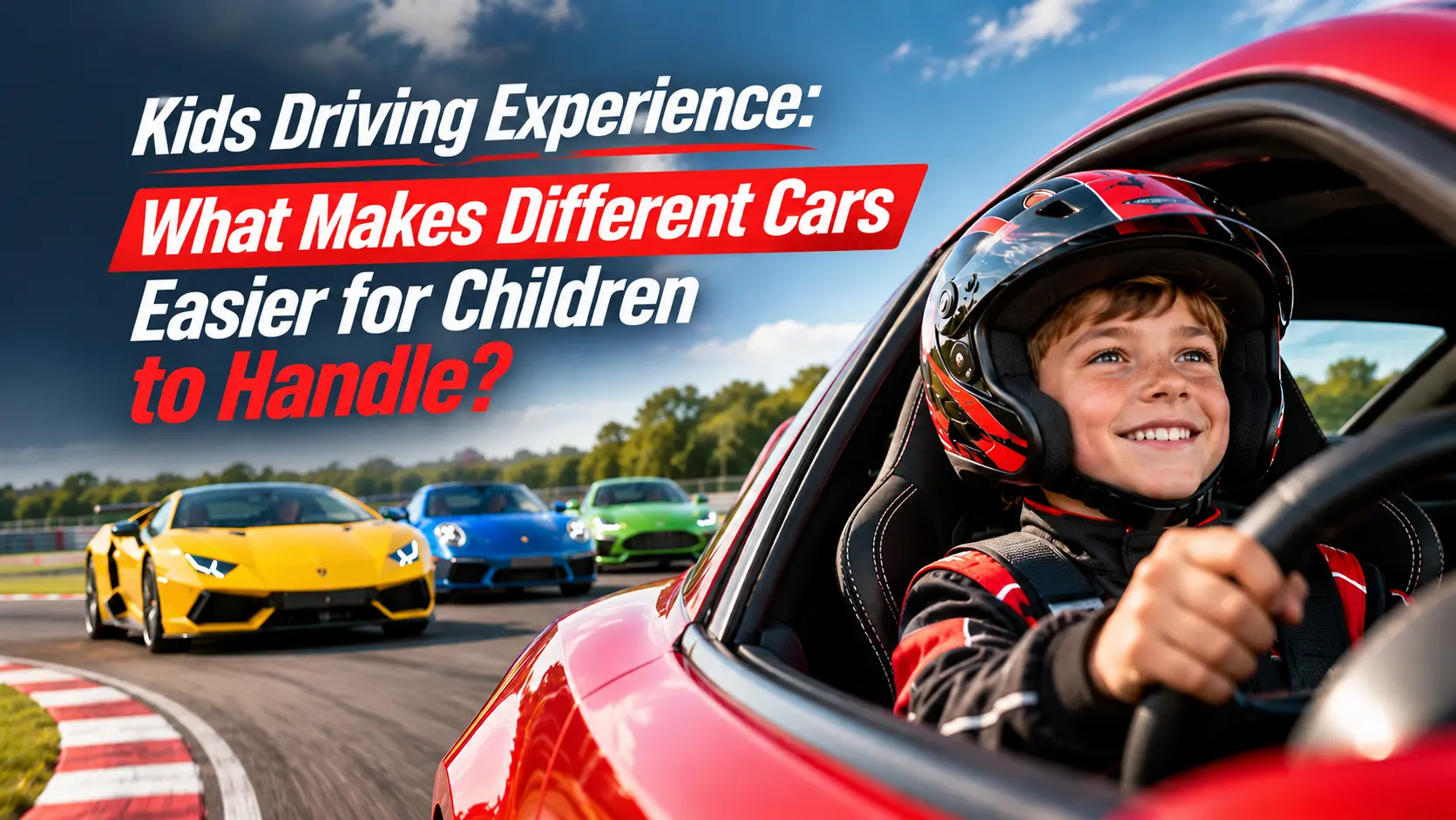
A kids driving experience is often chosen based on the badge on the bonnet. But there’s more to consider than just the car’s name or brand. The car itself plays a big part in shaping your child’s experience. Two supercars might look equally impressive parked side by side, yet feel completely different once your child gets behind the wheel and heads out onto the track.
In this guide, we’ll explore what makes each supercar different and how those differences can affect your child’s driving experience. You’ll discover which features help young drivers feel comfortable and confident from the start, as well as which ones might make their first lap a little more challenging.
Quick Answer: What Makes a Car Easier for Children to Handle?
A car is easier for a child to handle when the gearbox is simple and the steering feels light. The seat also needs to fit their body well. Smooth power delivery helps too because sudden bursts of speed can rattle a nervous driver.
Junior drivers at Supercar Gift Days must be between 10 and 17 years old and at least 4 ft 10 in tall. Those rules get your child into the car. How the car fits and responds decides whether they enjoy the drive or spend it feeling tense.
Which Car Features Matter Most in a Kids Driving Experience?
Four things shape how a child copes behind the wheel. It’s worth checking each one before you lock in a car.
How Does Gear Selection Affect a Kid’s Driving Experience?
Many modern supercars use a paddle gearbox. Your child pulls a small lever behind the wheel instead of working a clutch pedal and a gear stick together. That takes a big job off their plate and leaves more attention for steering and braking.
Older cars can ask for much more. The Nissan Skyline R34 came with a manual gearbox, so a child would need to find the clutch bite point while also turning the wheel. That’s a lot to learn on a first drive.
Gearboxes can differ between individual cars, so ask the team what’s fitted to the one you like. A simple setup gives your child:
- One less pedal to worry about
- Smoother progress through each gear
- More attention for the instructor’s directions
How Do Seating Position and Pedal Reach Affect Handling?
Supercars sit very low and the seats wrap tightly around the body. Two children of the same height can have quite different leg lengths. One may reach the pedals easily, while the other has to perch right on the edge of the seat.
A good fit usually looks like this:
- They can press the brake fully without leaning forward
- Their elbows stay slightly bent when they hold the wheel
- They can see over the dashboard without stretching
- Getting in and out of the low seat doesn’t feel awkward
Why Do Some Cars Have Lighter or Heavier Steering?
Steering does not feel the same in every supercar. Most newer cars have power steering, so the wheel feels light and does not take much effort to turn at slower speeds. That really helps younger drivers, especially if they are smaller. Older cars can feel much heavier, and a child can end up with tired arms before the drive is even finished.
Light steering has a catch, though. A car with very quick steering reacts to tiny movements. A nervous child may turn the wheel too far and feel the nose dart sideways.
A calmer setup is more forgiving of those early mistakes. It lets confidence build lap by lap instead of leaving your child worried about every small input.
How Do Accelerator and Brake Responses Differ Between Cars?
Not all supercars will behave alike during acceleration. Some accelerate gently depending on how hard the driver presses the pedal, while some accelerate suddenly only after revving. This variation could surprise a kid used to a different type of vehicle.
The braking process is also not consistent across cars. There are those with powerful brakes that brake suddenly with minimal force applied. This could unsettle a child who stamps his/her foot on the pedal of such a car.
In most cases, gentle and gradual application of force will produce positive results. In some cars, this becomes much easier.
What Feels Different When Children Drive Two Supercars?
Imagine a 13-year-old who starts by driving an Audi R8 but then moves on to drive a Ferrari 458. In the R8, everything is smooth, even from the beginning corners of the track. It has a large windscreen, which means that the driver has a good view and the steering allows time for thought. Most teenagers find themselves comfortable within a few laps in the car.
The Ferrari asks for more. The steering reacts faster and the engine pulls harder as the revs rise. That makes it thrilling but far less forgiving of rough inputs. The same child might need a few extra laps before they stop turning the wheel too much.
Neither car is better. They suit different personalities. A cautious child often enjoys the calmer one first, while a confident child may want the sharper one straight away.
Two other details can change the feel as well:
- Width: Width catches a lot of them out because these cars are not far off two metres wide, so working out where the bodywork finishes and the track begins takes a while at first.
- Drive layout: Then there’s what happens when they put their foot down. A rear-wheel-drive car like the McLaren 570S will feel much happier if they’re gentle with it, whereas something with four-wheel drive, the Nissan GT-R, is a good example.
Conclusion
The best car for a kids driving experience is the one your child can control with confidence. Gearbox type and seat fit matter most. Steering weight and pedal response come right after that. Your child’s own temperament then decides the final pick.
Start with the dream car, every parent does, but run the size check before you pay, and if it looks like a poor fit, have a second choice in mind, ideally something a touch calmer that they can grow into during the session.