Introduction
A junior driving lesson is probably the first time your child gets to drive a proper car with someone qualified sitting right next to them. Most kids come off the track grinning and ready to tell everyone about it. What they don’t always notice is how much they picked up along the way.
Some of it is about the car, like how to steer and brake without jerking everything about. The rest has more to do with how they handle instructions and nerves. This guide goes through both and also mentions what a session won’t cover, so you know exactly what you’re booking.
What Practical Driving Skills Can Children Develop During a Junior Driving Lesson?
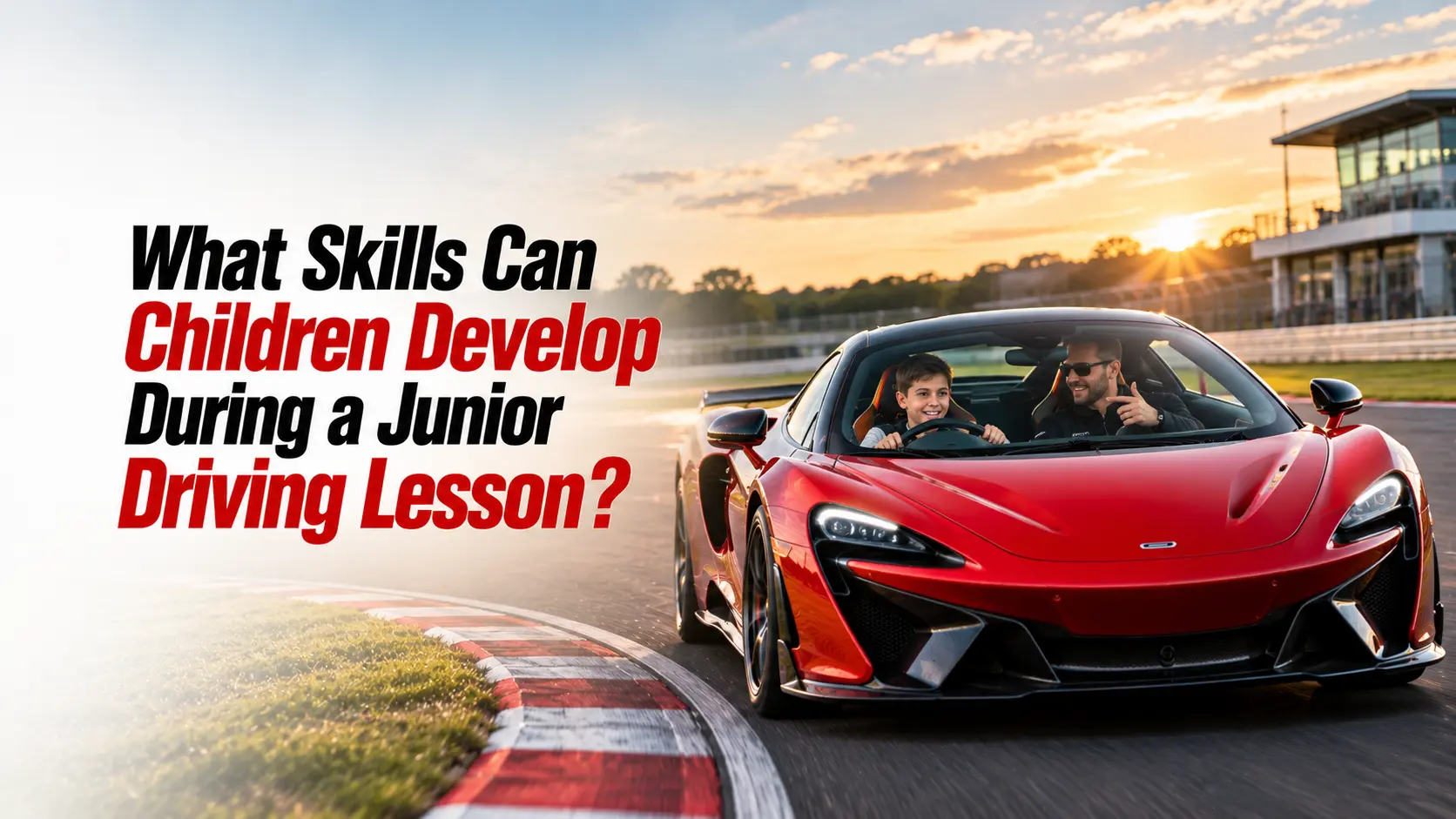
Supercar Gift Days runs its junior package for ages 10 to 17, and the driving happens on a private circuit. An ARDS-qualified instructor stays in the passenger seat from start to finish. Every skill below comes out of that one-to-one coaching.
Making Smooth, Controlled Steering Movements
Supercars respond quickly to the wheel. Turn it too hard, and the nose goes exactly where you didn’t plan. Kids tend to notice this after a few corners and start easing their hands without anyone telling them to.
By the end of the session, most of them can manage a couple of things:
- Turning in a small steady amount as a bend gets closer
- Letting the wheel straighten gradually on the way out
Smooth steering sits under almost everything else, so it helps that children feel the difference straight away.
Understanding Acceleration and Braking
The pedals take some getting used to. A light touch on the throttle gets a much bigger reaction than it would in a family car, which makes children think about how hard they’re pressing for the first time.
Typical things they work on:
- Pressing the throttle gently
- Braking early enough and releasing the pedal slowly as the car settles
- Guessing how much speed needs to go before a corner
The car doesn’t hide anything. Press too hard and everyone feels it. Get it right and the car just glides along.
Looking Ahead and Anticipating Turns
Most beginners watch the bonnet because it feels safer. The trouble is you end up reacting late to everything. So instructors spend a good part of the drive asking children to find the next marker early.
Sophie is 12 and spent her first mile staring at the front of the car. Her instructor asked her to pick out the next cone before she reached the current one. Her steering looked calmer after a single lap.
When it clicks, you’ll usually see:
- Eyes up before the bend
- Hands ready a bit earlier
- Speed dropping at the right spot
- Fewer last-second corrections
Understanding the Car’s Position and Surrounding Space
A low seat makes everything look odd at first. The bonnet seems long and the edge of the track looks a lot further away than it really is. Children have to work out how wide the car actually is, and the instructor talks them through it as they go.
They end up judging two main things:
- How much gap sits between the car and the track edge
- How much room a corner really needs
With a minimum of three miles in each car on the junior supercar driving experience, there’s a fair bit of time to get this right.
What Mental and Personal Skills Can a Junior Driving Lesson Help Build?
Parents are often more surprised by this side. The circuit asks your child to stay calm and take direction. It also asks them to carry on after something goes wrong. That’s useful far outside a car.
Listening and Responding to Instructions
Every session begins with a short classroom briefing. Once the car is moving, the instructor calls things out like “brake now” or “ease off”. Children have to act on those calls quickly, which isn’t something most of them practise at school.
Afterwards, parents tend to notice:
- Better focus when someone gives a short instruction
- Fewer interruptions at the wrong moment
- Questions when something isn’t clear
Learning from Mistakes and Instructor Feedback
Everyone gets a corner wrong at some point. A good instructor doesn’t make a fuss about it. They say what happened and suggest one change, then the child tries it on the next section.
If the fix works a minute later, mistakes start to feel like a normal part of learning. Kids remember that. It also tends to make them less worried about trying something again.
Developing Patience and Self-Control
A powerful car makes young drivers want to put their foot down. The instructor sets the speed, so waiting becomes part of the drive. It sounds simple, but plenty of ten-year-olds find it hard.
A couple of things get practised a lot:
- Holding off on the throttle until the instructor says go
- Staying calm while family watches from the side
Building Confidence When Trying Something New
Doing something new with family watching can be nerve-wracking. Lots of children start quiet and finish up chatting about which car they want to drive next. Little wins add up fast.
You’ll hear about moments like these on the way home:
- The first clean corner
- A smooth stop
- Finishing a full drive with steady hands
Junior drivers can take anywhere from one to seven cars from a range of models, so the day feels like theirs. If your child is younger or isn’t sure about driving yet, the passenger experience starts from age five and lets them watch a professional handle the car first.
Conclusion
A junior driving lesson teaches more than most parents expect. On the practical side, your child gets used to gentle steering and careful pedal control. They also learn to look ahead and judge the space around the car. The personal side adds listening and patience along with a real boost in confidence.
None of this replaces proper road lessons later on. What it does is give your child a head start on how a car behaves and how to take guidance. Check the age and height rules before you book and ask the team if anything is unclear.