Introduction
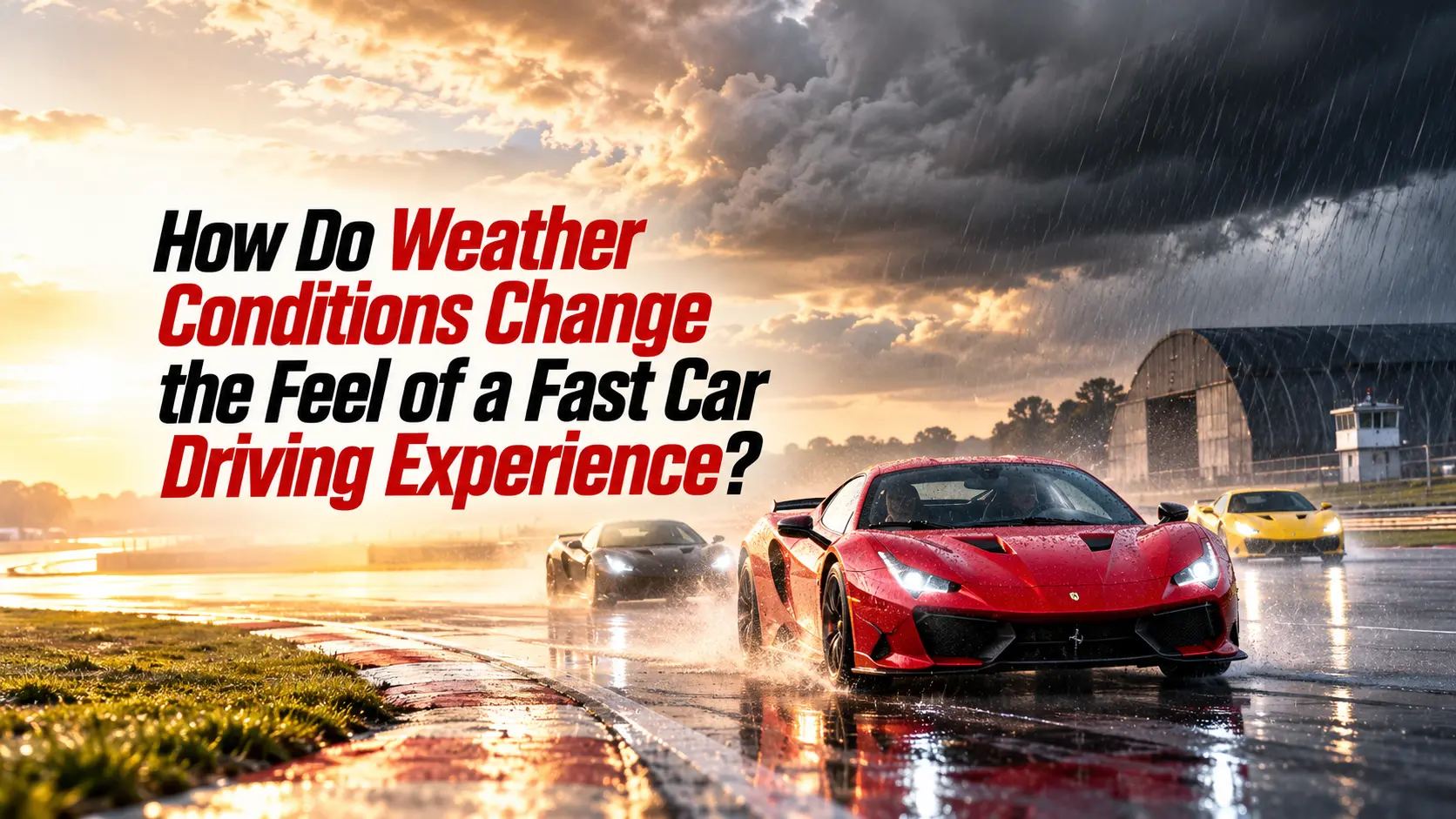
A fast car driving experience can feel completely different from one day to the next, and the weather is usually the reason. The same car on the same track can feel sharp and lively in the sun and far more careful when it rains. You’ll notice the change within the first couple of laps, even if you’ve never been on a circuit before.
This guide shows what changes in each type of weather and how it feels from the driver’s seat. You’ll also find a few easy habits that help you enjoy the day, whatever the forecast says.
How Does Weather Change the Feel of a Fast Car Driving Experience? Quick Answer
Weather mainly changes two things. It changes how much grip the tyres have and how well you can see the track ahead. In dry conditions, a car feels quick to respond and easy to read. When it’s wet or cold, the same car feels softer and takes a little longer to answer your inputs.
On a Supercar Gift Days drive, a qualified ARDS instructor sits beside you, so the pace is set to suit whatever the day brings.
What Does a Fast Car Driving Experience Feel Like in Different Weather?
Every kind of weather changes a different part of the drive. Here’s what you can expect to notice from behind the wheel in each one.
Dry and Sunny Weather: Predictable Grip and Sharper Response
On a dry and sunny day, the tyres have plenty of grip to work with. The steering feels direct, and the car follows your hands almost straight away, which makes it easy to settle in.
Braking feels more predictable too. After a couple of stops, you know roughly where the pedal bites, and that gives you a lot more confidence going into the next corner.
A few things you’ll probably notice on a bright day:
- The steering reacts to very small movements
- The brakes feel the same each time you press them
- The engine note comes through clearly
- Strong sunshine can make your eyes tired after a while
Pack a pair of sunglasses if you’ve got them. They make the breaks between drives much more comfortable, especially on a long supercar driving experience with several cars.
Rainy Weather: Less Grip and a More Demanding Drive
Rain reduces the amount of grip the tyres can find on the surface. The car doesn’t suddenly become hard to drive, but it does stop forgiving quick or sharp movements.
You’ll often feel the steering go lighter in your hands. That’s the car telling you the front tyres have less to hold on to, so it’s worth paying attention to.
Here’s an example. Say you’re about to drive a Lamborghini Huracán on a drizzly morning and you expect to be pushed back into the seat straight away. Instead, you spend the first lap finding out how gently the car likes to be treated, and by the third lap, you’re enjoying the challenge of getting it right.
A few other things come with the wet:
- There’s a slightly longer gap between what you do and what the car does
- You can hear water hitting the underside of the car
- Puddles can tug at the steering for a moment
Your instructor watches the surface for you and tells you when to ease off. A shower on its own rarely changes the plan for the day, although the venue always makes the final call on safety.
Cold Weather: How Lower Temperatures Affect Tyre Response
Tyres work best once they’ve warmed up. On a cold morning they need a few laps to reach that point, so the car can feel a bit dull through the early corners.
As the session goes on, you’ll feel the grip slowly improve. By the fifth lap the same car can feel noticeably livelier than it did on the first one, which makes the later laps the most fun.
In the cold you might find that:
- The steering feels slightly heavier at the start
- The brakes respond better to a gentle first press
- Your instructor keeps the pace modest until everything warms up
Dress in a few thin layers so you can stay comfortable between drives. Refreshments are generally available on site, which is handy when the wind picks up.
Poor Visibility: How Glare, Mist and Spray Affect Driver Confidence
Being able to see clearly matters more than most people think. When the view gets worse, your brain slows everything down to cope, so even a modest pace can feel busy and a little stressful.
Three things cause most of the trouble on the day:
- Glare: A low sun can wash out the next corner for a second. Sunglasses and keeping your head steady both help a lot.
- Mist: Damp mornings can fog up the windscreen from the inside. Tell your instructor straight away if the glass starts to cloud over.
- Spray: A car ahead can throw up a cloud of water. Leaving a bigger gap gives you a clearer view of the track.
Your instructor calls out each section before you reach it. Hearing a calm voice describe what’s coming next makes it much easier to relax and keep your focus.
Can a Fast Car Feel Faster Without Actually Going Faster?
Yes, it can because speed is something you feel through your senses as much as something you read from a dial. Weather changes what those senses pick up.
Here are a few ways it happens:
- Wet tarmac makes small movements of the car easier to notice
- Spray and mist hide faraway landmarks, so the things close to you seem to rush past
- Dull light makes the surroundings feel nearer than they are
- Wind in an open-top classic adds constant noise around your ears
This is good news if you’re a bit nervous. A gentle lap in the rain can feel just as lively as a quicker one in the sun, so you don’t have to chase big numbers to enjoy the drive.
The opposite can happen on a bright and dry straight. The view is so clear that the car can feel calmer than its speed suggests.
Conclusion
Each kind of weather gives a fast car driving experience its own mood. Sunshine makes the car feel sharp and rain asks you to be a little more patient. Cold mornings reward you for sticking with the first few laps, while poor visibility shows how much you rely on your eyes.
Check your booking details before you travel and call the centre if you’re worried about the forecast. Flat shoes and a few layers will cover most situations. Once you’re in the car, you can leave the decisions about pace to your instructor and focus on enjoying the driving day.